Silakan login untuk mengakses laman berikut
05 Apr2013
Why Rural Hospitals May Pose a Greater Risk of Death
 For 15 years, Congress has bestowed special privileges to some small remote hospitals, usually in rural areas, to help them stay afloat. Medicare pays them more than it pays most hospitals and exempts them from financial pressure to operate efficiently and requirements to reveal how their patients fare. Nearly one in four hospitals qualifies for the program.
Despite these benefits, there’s new evidence that the quality of many of these hospitals may be deteriorating. A study published Tuesday found that during the past decade the death rates of patients at these critical access hospitals were growing while mortality rates at other hospitals were dropping.
“This carved-out group of hospitals seems to be falling further and further behind,” said the paper’s lead author, Dr. Karen Joynt of the Harvard School of Public Health.
The study, published in the Journal of the American Medical Association, found that in 2002, mortality rates at critical access hospitals for Medicare patients with heart attacks, heart failure and pneumonia were about the same as at other hospitals. But they have diverged since then.
While death rates at other hospitals dropped by 0.2 percent a year, reaching 11.4 percent in 2010, mortality rates at critical access hospital death rates rose about 0.1 percent each year, reaching 13.3 percent in 2010. Critical access hospitals also did worse than other small, rural hospitals that were not in the program. The paper said all these results were statistically significant.
Joynt and her co-authors, John Orav and Dr. Ashish Jha, also of Harvard, suggested that the hospitals’ care may suffer because they don’t have the latest sophisticated technology or specialists to treat the increasingly elderly and frail rural populations. A previous paper by the trio found that critical access hospitals were less likely to have the ability to perform cardiac catheterizations and to have intensive care units.
“As we have more advanced treatments, it’s harder for rural hospital to keep up,” Joynt said. “It’s hard to provide care for really, really sick patients in a resource-limited setting.”
She also suggested that the hospitals may have been victims of their lenient treatment by the government. Since hospital officials are not required to evaluate their performances to make reports to Medicare, the government may not realize that facilities could need additional assistance in caring for sicker patients.
“This is 1,000 hospitals, a quarter of the hospitals in the country, that are invisible,” she said. “We’ve created a completely separate system, and in this case it looks like that has not done patients in these hospitals any favors.”
Brock Slabach, an executive at the National Rural Health Association, cautioned against drawing sweeping conclusions from the report. “Mortality is just one small part of the picture of what qualities means,” he said. He said the association’s own research has found that rural hospitals do better in patient satisfaction surveys than do urban hospitals, and that there’s no substantial difference in other measures such as readmissions.
Congress started the critical access program in 1997 to stave off hospital closures in places where patients had no good alterative because the next hospital was at least 35 miles away by regular roads or 15 miles by secondary roads. Hospitals with 25 or fewer beds could qualify. Hospitals near competitors, in cities as well as rustic areas, also got into the program through a loophole that until 2006 allowed states to designate hospitals as “necessary providers.”
In 2011, 1,331 hospitals qualified for the program, which reimburses hospitals for all of the costs of caring for Medicare patients plus an extra 1 percent.
It’s a generous system compared to the way Medicare pays other hospitals. They are given set sums for each patient based on their illnesses, a method that does not always cover all the costs of treatment.
Medicare spends about $8 billion a year on critical access hospitals, amounting to 5 percent of the country’s inpatient and outpatient expenses, according to Congress’ Medicare Payment Advisory Commission.
The states with the most critical access hospitals are Kansas, Iowa, Minnesota, Texas and Nebraska, all with between 65 and 83 such facilities,federal data show. In 2011, only Connecticut, Delaware, the District of Columbia, Maryland, New Jersey, Rhode Island, Puerto Rico and the Virgin Islands lacked any critical access hospitals.
Tuesday’s study adds to previous research by the Harvard researchers. In 2011, the researchers found that critical access hospitals were less likely to have basic electronic health records. They also first reported then that these hospitals had worse death rates. After that paper was published, Joynt said rural hospital officials complained that the researchers did not note the improvements the hospitals had made over time.
In the study released Tuesday, Joynt and her colleagues examined that objection, but they determined that although some critical access hospitals had improved, overall the group had done worse compared with others. Tuesday’s study is the result of that research.
An accompanying editorial by Dr. John Ioannidis, a medical professor at Stanford, called the paper “the best study to date” on the issue, though he said the paper might not have captured all the potential reasons for the discrepancy in death rates. He also questioned whether policymakers should enact broad changes on critical access hospitals.
“Trying to impose quality data collection and reporting in such hospitals that have already strained resources may actually do more harm than good,” Ioannidis wrote. “Even for non-CAHs, the evidence is tenuous that performance and quality initiatives do work.”
Joynt said that her research, while not conclusive, indicated that the hospitals might need additional help. For instance, she said, through telemedicine, larger hospitals could offer the advice of their specialists to rural hospitals confronting complex cases. In addition, there might be better ways to transfer those patients to more advanced hospitals, she said.
“I see this as more of a systems problem than just a hospital problem,” Joynt said. “I don’t think that there really exists the right sort of systems or incentives to make that happen.”
Source: pbs.org
05 Apr2013
Pasien Membludak, Dokter Rawan Kena Tuntutan
 Jakarta – Banyaknya peraturan dan kebijakan yang ditetapkan pemerintah saat ini, baik pusat dan daerah, membuat para dokter yang berpraktek rawan terkena tuntutan. Begitu juga dengan makin meningkatnya jumlah pasien. “Membludaknya pasien akan tingkat kualitas kinerja pelayanan kesehatan dokter dan dokter gigi. Dokter akan bekerja secara profesional jika berada dalam sistem yang baik pula,” kata Ketua Konsil Kedokteran Gigi Indonesia, drg. Afi Sarsito, Sp.PM, dalam jumpa pers di Kantor KKI di kawasan Menteng, Jakarta, Rabu (3/4).
Dalam contoh kasus terbaru, kebijakan Kartu Jakarta Sehat (KJS) yang dikeluarkan Gubernur DKI Joko Widodo yang dinilai tidak dibarengi kesiapan sarana dan fasilitas rumah sakit, menyebabkan peningkatan tiga kali lipat jumlah kunjungan berobat masyarakat ke puskesmas atau rumah sakit. Jumlahnya bahkan mencapai 300-500 orang per hari. Akibatnya, keselamatan pasien pun menjadi taruhan.
Konsil Kedokteran Indonesia (KKI) sebagai ‘rumah profesi’ merasa perlu mensosialisasikan tentang prinsip profesionalisme dokter dan dokter gigi serta penyelenggaraan kedokteran yang baik. Misalnya saja hasil survei bahwa pemeriksaan dokter yang dilakukan kurang dari 15 menit sangat rawan terjadi resiko kesalahan pengambilan keputusan/tindakan. Dengan keterbatasannya, seorang dokter maksimal melalukan pemeriksaan 20-30 pasien, sedangkan dokter gigi 12-15 pasien. KKI menyambut baik semua program kesehatan untuk mensejahterakan masyarakat. Namun KKI juga mengupayakan permasalahan tersebut dibicarakan di tingkat pencetus kebijakan maupun para pelaksana pelayananan kesehatan.
Dalam kesempatan itu, Ketua Majelis Kehormatan Disiplin Kedokteran Indonesia (MKDI) Prof. Dr. Med. Ali Baziad, SpOG (K) mengatakan ada banyak keluhan dari beberapa rekan dokter yang mengaku kewalahan dan kelelahan.“MK DKI menerima pengaduan masyarakat. Yang terbanyak adalah masalah komunikasi dari dokter yang memiliki pasiennya banyak dan hanya 2 menit memeriksa, sehari 70-80 pasien harus ditangani”
Pemerintah Provinsi DKI Jakarta diminta untuk mengevaluasi apa yang menyebabkan jumlah pasien membludak. Apakah permasalahannya di rumah sakit rujukan, atau koordinasi dengan rumah sakit. Lebih dari itu, masyarakat juga harus dididik untuk menjadi pasien yang cerdas, dengan program kesehatan yang lebih bersifat efektif, promotif, dan preventif. Sedangkan Kartu Jakarta Sehat (KJS) dinilai hanya merupakan program yang kuratif.
Sumber: gatra.com
05 Apr2013
Bangsal Kelas III Plus Bakal Dibuka di RS dr Moewardi
 SOLO – Rumah Sakit dr Moewardi berencana merombak fasilitas di bangsal kelas III menjadi ruangan yang lebih nyaman bagi pasien. Bangsal tersebut akan dilengkapi dengan air conditioner (AC) serta kamar mandi dalam, layaknya ruang perawatan di bangsal kelas I.
Langkah tersebut diambil untuk menanggapi keluhan yang selama ini dilontarkan pasien. “Pasien kan sering kirim sms [short message service] kepada saya, mereka mengeluh ‘pasien bukan cuma butuh berobat, tapi juga fasilitas yang nyaman’,” ujar Direktur RS dr Moewardi, Basoeki Soetardjo kepada wartawan, Rabu (3/4/2013).
Sebagai permulaan, rumah sakit telah siap membuka ruang rawat inap baru dengan 18 ranjang pasien di Bangsal Melati 3. Ruangan yang akan diresmikan pada 15 April mendatang itu disebut sebagai bangsal kelas III plus lantaran dilengkapi dengan AC dan kamar mandi dalam. “Ya seperti Kelas III plus lah, kami sengaja menambah bed juga untuk menampung jumlah pasien yang kian membeludak. Supaya enggak ada yang ngendon di IGD [instalasi gawat darurat] lagi,” ungkap dia.
Saat ini, sebagian ruang rawat inap di bangsal kelas III masih diisi lebih kurang sembilan ranjang pasien. Sementara, dalam peraturan Menteri Kesehatan, setiap ruang perawatan maksimal dihuni delapan pasien. “Jumlah pasien terus meningkat, akhirnya jadi overload. Kami terus mengusahakan penambahan bed dan ruang perawatan. Saat ini jumlah bednya sudah 789, di tambah bed yang baru jadi 807,” urai Basoeki.
Basoeki menambahkan, ruang rawat inap tambahan tersebut merupakan proyek percontohan. Manajemen rumah sakit ingin melihat respons dari pasien perihal perombakan fasilitas tersebut. Nantinya, jika ruang tersebut diminati, rumah sakit akan merombak fasilitas di seluruh bangsal kelas III. “Mudah-mudahan tahun depan semua ruang kelas III sudah selesai dirombak, sampai sekarang pengerjaannya sudah 40%,” tuturnya.
Kendati dilengkapi dengan fasilitas yang lebih nyaman, pihak rumah sakit berjanji tidak akan menaikkan tarif kamar. Biaya yang harus dirogoh pasien untuk menempati kamar di kelas III plus tidak berbeda dengan kelas III biasa. “Kan pelayanan kesehatannya sama, harga obatnya ya sama, yang berbeda hanya fasilitas di kamarnya. Nanti namanya juga sama tetap kelas III,” imbuh Wakil Direktur Umum RS dr Moewardi, Nana Hoemar Dewi.
Sumber: solopos.com
04 Apr2013
Our View: Ending an era in hospital care
When Sister Margaret Wright retired as chief executive officer of Palos Community Hospital last week, it was more than a routine business announcement.
It signaled the end of a grand historical lineage that had extended unbroken from the 19th century — a member of a Catholic religious order has been in charge of a Chicago-area hospital since then.
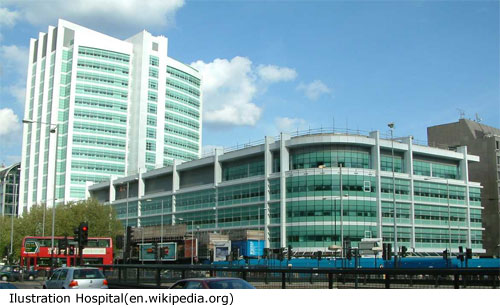 Most hospitals in the region were run that way in the beginning, as charitable organizations, often by the Montreal-based Religious Hospitallers of St. Joseph in which Wright serves. The nuns came to serve the health, spiritual and emotional needs of Chicago’s immigrants and its poorest patients.
Wright, 77, was born on Chicago’s South Side, has been a nun for 53 years and ran Palos Community for 35 years. There have been a few other nuns retiring as hospital execs in recent months, but her exit is especially noteworthy because she is the last.
Wright’s years at Palos Community coincided with its rise as a premier, independent community hospital. She has declined interviews for decades, but friends, colleagues and employees said her hospital is a direct reflection of her concern and passion for human values.
A Catholic hospital with a secular name, Palos Community was founded in 1972 and has grown into the fourth-largest independent hospital in the Chicago area. Revenue climbed nearly 6 percent to $359 million between 2007 and 2011.
Bolstered by having a large number of patients on private insurance, the Palos Heights hospital has stockpiled more than $680 million in cash and investments, often outdoing larger rivals. It recently opened a seven-story surgical and patient pavilion with a new intensive care unit — nearly doubling the hospital’s beds to 428.
But as healthy as Palos Community’s bottom line is now, the pressure of changing demographics, older patients and reliance on government payments could make consolidation inevitable.
In any case, Wright leaves the hospital healthy and vibrant, and the community it serves is better for that.
Source: southtownstar.suntimes.com
04 Apr2013
Preemies do better when parents involved in hospital care
Skin-to-skin contact reduces pain response by 30 per cent
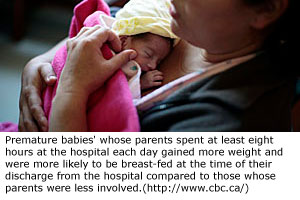 Premature babies who spend the first months of their life in neo-natal intensive care units seem to do better and don’t respond as intensely to pain if their parents are heavily involved in their care at the hospital, Canadian research suggests.
A pilot study involving 31 premature infants whose parents committed to spending at least eight hours at the hospital each day reported improvements compared to infants not enrolled in the program. The study at Mt. Sinai Hospital in Toronto found:
- The babies involved in the study gained significantly more weight.
- They were far more likely to be breast-fed at the time of being discharged from the hospital (82.1 per cent versus 45.5 per cent).
- Their parents reported a significant decrease in stress by the time their babies were discharged, whereas parents not in the program reported no change in stress.
Dr. Karel O’Brien, a neonatalogist at Mt. Sinai, said there is also some evidence that infants whose parents spend lots of time with them in the NICU have fewer infections.
Meanwhile, 19 clinical trials examining the effect of skin-to-skin contact between infants and their parents are finding that it helps the babies cope with painful procedures and recover more quickly.
Studies underway at 16 sites
O’Brien was the lead author of an article reporting the preliminary results of the Mt. Sinai study in the journal BMC Pregnancy and Childbirth earlier this year. Further research on the approach is currently underway at Mt. Sinai and 16 other sites across Canada, including the IWK Hospital in Halifax.
That’s where tiny baby Teddy was born almost two months before his due date. His mother, Beverley Ivy Newell, said he’s already had IVs put in and blood samples drawn multiple times.
She added that she’s happy to be at a hospital where parents are encouraged to be part of their infant’s care so she can hold and comfort Teddy during painful procedures.
“Having him close with me helps for both of us,” she said, her voice wavering with emotion.
Marsha Campbell-Yeo, a neonatal nurse practitioner and researcher at the IWK hospital, said a mother’s closeness and comfort can diminish a baby’s pain response by 30 per cent.
Newell said she sees that: “He doesn’t struggle as much and by reading the monitor, you can see [from] his heart rate, he calms down much faster.”
O’Brien said she hopes the studies will confirm the long-term health benefits of this approach for babies and result in more support for parents who participate.
“If we really think that parents need to be in the NICU when their babies are in the NICU,” she said, “then it may make sense to try and get extended maternity leave for those mothers.”
Source: cbc.ca
04 Apr2013
Kartu Jamkesmas Kadaluarsa,19 Pasien Gakin Ditolak RS
 CILEGON-Sebanyak 19 pasien yang berasal dari keluarga miskin (gakin) selaku pemegang kartu Jaminan Kesehatan Masyarakat (Jamkesmas) mengadu ke Wali Kota Cilegon Iman Aryadi, karena mereka ditolak oleh pihak Rumah Sakit Umum Daerah (RSUD) Cilegon.
Sementara pihak RSUD Cilegon menolak kartu Jamkesmas para pasien karena dianggap sudah tidak berlaku lagi.
Salah seorang pasien cuci darah, Rina Wati (30), warga Kota Cilegon menjelaskan, kedatangannya bersama 18 teman pasien yang lain ke Kantor Wali Kota Cilegon untuk mengadu terkait keberadaan kartu Jamkesmas yang mereka pegang dinilai sudah tidak berlaku lagi.
“Kami diberitahu pihak RSUD Cilegon bahwa kartu Jamkesmas yang kami pegang ini masa berlakunya sudah habis. Saya bersama 18 teman yang lain harus cuci darah rutin di RSUD Cilegon. Kalau kondisinya seperti ini, kami tidak bisa berobat lagi. Karena itu kami mengadu ke Wali Kota Cilegon. Kami berharap semoga ada jalan keluarnya,” ujar Rina, di Cilegon, Selasa (2/4).
Rina mengungakapkan pihak rumah sakit telah menyampaikan bahwa tidak bisa melayani pemegang kartu Jamkesmas karena masa berlakunya telah habis. Apalagi ada peraturan baru dari Kementerian Kesehatan.
“Saya bersama teman-teman lain adalah pasien cuci darah. Dalam waktu seminggu, kami wajib melakukan dua kali cuci darah. Biaya yang harus dikeluarkan untuk sekali berobat sebesar Rp750 ribu. Kami menyampaikan syukur dan terima kasih karena Wali Kota Cilegon Iman Aryadi akan membantu dari anggaran lain,” ujarnya.
Ayah dari pasien cuci darah lainnya bernama Dadang (45), berharap agar Pemkot Cilegon, dapat membantu pasien. Sebab, saat ini untuk menjalani cuci darah yang dijadwalkan pada Kamis (4/4) mendatang, dirinya mengaku hanya mengandalkan Jamkesmas.
“Kata pihak rumah sakit, masa berlaku kartu Jamkesmas sudah berakhir. Sedangkan, kartu yang baru belum kami miliki,” jelasnya.
Secara terpisah, Sekretaris Daerah (Sekda) Pemkot Cilegon, Abdul Hakim Lubis mengatakan, 19 pasien cuci darah itu akan dibantu menggunakan anggaran lain melalui Cilegon Corporate Social Responsibility (CCSR). Sebab, Jamkesmas saat ini belum dilakukan pelelangan.
“Kami sudah mendapat instruksi dari Wali Kota Cilegon. Para pasien cuci darah itu akan tetap melakukan cuci darah di RSUD Cilegon, pada Kamis (4/4) mendatang. Kami sudah berkoordinasi dengan pihak RSUD Cilegon. Nanti bayarnya belakangan,” ujarnya.
Dia mengatakan, kartu Jamkesmas masa berlakunya selama setahun. Untuk penerima kartu Jamkesmas akan didata ulang dari pemerintah pusat.
“Pendataan ulang itu tidak mengurangi kuota yang sudah ada. Jadi pemegang kartu Jamkesmas yang ada tidak perlu khawatir,” ujarnya.
Sumber:suarapembaruan.com
04 Apr2013
Rumah Sakit Jiwa Aceh Kelebihan Pasien
 Banda Aceh — Rumah sakit jiwa di Aceh masih terbatas untuk menampung pasien sakit jiwa. Hal tersebut disampaikan oleh Kepala Badan Pelayanan Kesehatan Jiwa Aceh, Dr Amren Rahim, M. Kes, dalam diskusi yang difasilitasi oleh Public Expenditure Analysis and Capacity Strengthening Program (PECAPP) Aceh di Banda Aceh, Selasa, 2 April 2013.
Menurut dia, jumlah pasien jiwa yang berada di Rumah Sakit Jiwa Banda Aceh dan Pusat Rehabilitasi Jiwa di Jantho, Aceh Besar, mencapai 700 orang. Sedangkan jumlah kapasitas tempat tidur hanya 340 unit. “Tempat yang ada terpaksa dimaksimalkan dulu,” ujar Amren.
Pasien jiwa tersebut terdiri dari beberapa kelompok jenis gangguan jiwa, di antaranya ada yang skizoprenia dan gangguan emosi. “Pecetusnya yang terbanyak karena sosial ekonomi.”
Mengatasi overload-nya kapasitas rumah sakit jiwa, Armen mengatakan, lembaganya sedang mengupayakan sebuah pendekatan yang melibatkan komunitas dan keluarga. Upaya tersebut agar masyarakat dapat menangani orang yang mendapatkan gangguan jiwa (tidak mengganggu) di komunitasnya dengan bantuan obat-obatan dari provinsi.
Adapun Kepala Dinas Kesehatan Provinsi Aceh M. Yani menambahkan, rumah sakit di kabupaten/kota di seluruh Aceh maupun puskesmas sudah diarahkan untuk menyediakan fasilitas tempat bagian pasien jiwa di daerahnya. “Kita targetkan 10 tempat tidur untuk masing-masing kabupaten di Aceh,” ujarnya.
Penanganannya, walaupun kekurangan dokter jiwa, tenaga medis dari kabupaten/kota telah dilatih untuk dapat menangani pasien jiwa. “Sehingga rumah sakit jiwa di Banda Aceh tidak membeludak,” ujar Yani.
Sumber: tempo.co
03 Apr2013
Perawat Asing ASEAN Hanya Boleh Sebagai Konsultan
 Jakarta, PKMK-Saat berlakunya ASEAN Economic Community di tahun 2015, lini perawat di Indonesia bisa dimasuki tenaga dari negara ASEAN yang lain, demikian pula sebaliknya. Di Indonesia perawat hanya diperbolehkan sebagai konsultan, ungkap Gita Wirjawan, Menteri Perdagangan RI (3/4/2013). Agar bisa menjadi konsultan, perawat asing tersebut harus memperoleh izin terkait dari instansi Pemerintah Indonesia. “Itu persisnya izin dari Kementerian Kesehatan RI, izin yang sama juga harus diperoleh dari organisasi profesi kesehatan di Indonesia,” kata mantan country director JP Morgan Indonesia itu.
Jasa kesehatan merupakan satu sektor jasa yang dibuka oleh Indonesia dan negara ASEAN lain di tahun 2015 itu. Adapun sektor lainnya adalah jasa bisnis, jasa komunikasi, jasa konstruksi, jasa distribusi, jasa transportasi, dan jasa keuangan. Lebih lanjut, Gita Wirjawan menambahkan tidak semua sektor jasa dibuka penuh oleh Indonesia. “Satu di antara yang tidak dibuka penuh adalah jasa kesehatan ataupun perawat itu. Demikian juga dengan jasa tranportasi di mana Indonesia hanya membuka sektor transportasi darat khusus untuk transportasi angkutan barang menggunakan tenaga orang dan hewan,” tambanya. Untuk sosialisasi ASEAN Economic Community,Kementerian Perdagangan RI telah melakukan sosialisasi sejak beberapa tahun yang lalu. “Antara lain dengan Kementerian Kesehatan RI, Badan Pengawas Obat dan Makanan RI, akademisi, lembaga swadaya masyarakat, dan lain-lain,” jelas Gita.
03 Apr2013
Bradford’s hospital patients will be surveyed
 Patients at Bradford Teaching Hospitals are to be asked to rate their ward as part of a new feedback scheme.
A&E patients and others staying on wards will be asked whether or not they would recommend their experience to friends and family.
The question will be: “How likely are you to recommend our Ward / A&E department to friends and family if they needed similar care or treatment?”
And it is all part of the new NHS-wide initiative called the Friends and Family Test. Joanne Reynard, who is Bradford Teaching Hospitals’ Friends and Family project manager, said: “The NHS Friends and Family Test is a great way of gathering feedback from patients which will help us to drive further improvements to the services we offer across the district.
“At the time of discharge, patients will be given a Friends and Family postcard and asked that simple question.
“A follow-up question then asks them why they chose the answer they did, so that we can learn more about how patients rate their care and experience with us.”
As well as A&E the new test will cover the inpatient wards at the Bradford Royal Infirmary, St Luke’s Hospital, and the three community hospitals at Westwood Park, Westbourne Green and Eccleshill.
Friends and Family Test responses can be dropped into feedback boxes at key points on each ward or in the A&E department. The postcard also has details of a web address and e-mail where patients can provide an electronic response if they prefer.
Assistant chief nurse Shelly Bailey, who is the Foundation Trust’s lead for patient experience, said: “We already ask patients to let us know their views about the treatment and care they receive but this new Friends and Family Test will be a very important indicator which will tell us whether patients are happy with the services and care that we provide. By continuing to improve our services we want to make sure that the experiences of all our patients are positive ones.”
Source: thetelegraphandargus.co.uk