|
|
|
![]() |
Core Competencies for infection control and hospital hygiene professional in the European Union Editor : European Centre for Disease Prevention and ControlTahun : 2013 Penerbit : European Centre for Disease Prevention and Control Bagi Anda yang ingin memiliki dan membaca, Silahkan Klik Disini |
|
|
|
![]() |
CREATING A SAFE ENVIRONMENT FOR CARE Defining the Relationship between Cleaning and Nursing Staff Editor : Royal College of Nursing (RCN) dan Association of Healthcare Cleaning Professional (AHCP)Tahun : 2013 Penerbit : Royal College of Nursing (RCN) dan Association of Healthcare Cleaning Professional (AHCP) Bagi Anda yang ingin memiliki dan membaca, Silahkan Klik Disini |
|
|
|
|
Cost-effectiveness of a nurse-based intervention (AIMS) to improve adherence among HIV-infected patients: design of a multi-centre randomised controlled trial Editor : Edwin Oberjé, Marijn de Bruin, Silvia Evers, Wolfgang Viechtbauer, Hans-Erik Nobel, Herman Schaalma, Jim McCambridge, Luuk Gras, Eric Tousset and Jan Prins Tahun : 2013 Penerbit : BioMed Central Bagi Anda yang ingin memiliki dan membaca, Silahkan Klik Disini |
|
|
|
|
|
Challenges for nursing education in Angola: the perception of nurse leaders affiliated with professional education institutions Editor : Leila Maria Marchi-Alves, Carla A Arena Ventura, Maria Auxiliadora Trevizan, Alessandra Mazzo, Simone de Godoy and Isabel Amélia Costa Mendes Tahun : 2013 Penerbit : BioMed Central Bagi Anda yang ingin memiliki dan membaca, Silahkan Klik Disini |
|
|
|
|
|
Patient preferences for HIV/AIDS therapy – a discrete choice experiment Editor : Axel C Mühlbacher, Matthias Stoll, Jörg Mahlich and Matthias Nübling Tahun : 2013 Bagi Anda yang ingin memiliki dan membaca, Silahkan Klik Disini |
|
|
|
|
|
Health-related quality of life questionnaires in lung cancer trials: a systematic literature review Editor : Kathrin Damm, Nicole Roeske and Christian Jacob Tahun : 2013 Bagi Anda yang ingin memiliki dan membaca, Silahkan Klik Disini |
|
|
|
|
|
Health Management – Different Approaches and Solutions Editor : Krzysztof Smigórski Tahun : 2011 Penerbit : InTech Bagi Anda yang ingin memiliki dan membaca, Silahkan Klik Disini |
|
|
|
|
|
Modelling Hospital Materials Management Processes Editor : Raffaele Iannone, Alfredo Lambiase, Salvatore Miranda, Stefano Riemma and Debora Sarno Tahun : 2013 Penerbit : InTech Bagi Anda yang ingin memiliki dan membaca, Silahkan Klik Disini |
|
|
|
|
![]() |
Oral Health Care – Pediatric, Research, Epidemiology and Clinical Practices Editor : Mandeep Singh Virdi Tahun : 2012 Penerbit : InTech Bagi Anda yang ingin memiliki dan membaca, Silahkan Klik Disini |
|
|
|
![]() |
Post Traumatic Stress Disorders in a Global Context Editor : Emilio Ovuga Tahun : 2012 Penerbit : InTech Bagi Anda yang ingin memiliki dan membaca, Silahkan Klik Disini |
|
|
|
Pledge to improve stroke services at Norfolk hospital
Health chiefs have pledged to improve services at Norfolk’s biggest hospital after it emerged that the NHS trust was not hitting any of its stroke targets.
Bosses at the Norfolk and Norwich University Hospital (NNUH) have drawn up a recovery plan to improve the speed of treatment and standard of care for patients who have suffered a stroke.
The hospital at Colney, which is one of three stroke centres in Norfolk and treats around 1,200 stroke patients a year, is currently failing to hit six key targets.
However, officials hope to have a stroke improvement plan in place by February, which includes an increase in the number of dedicated stroke beds and additional nurses, physiotherapists and consultants.
The pledge has been welcomed by members of the Norwich Clinical Commissioning Group. However, a question mark has been raised about how the improvements will be funded.
Patients who have suffered a stroke are supposed to be admitted to a hyper-acute stroke unit (HASU) within four hours of arrival at hospital. However, only 59pc of patients were admitted to HASU in that time limit so far this year.
The hospital is also failing to hit a target of ensuring patients have access to a brain scan within 60 minutes of arriving. Currently, only 76pc of patients who suffer a transient ischaemic attack (TIA) or mini stroke are treated within 24 hours, compared with the national target of 90pc.
The NHS foundation trust hopes to secure funding from the Commissioning for Quality and Innovation (CQUIN) to help make the changes.
Chris Cobb, director of medicine and emergency services at the NNUH, said the hospital provided the largest stroke service in the East of England.
“There has been significant growth in the volume of stroke patients being brought to the Norfolk and Norwich University Hospital, and as a consequence a step change is needed in the infrastructure and care pathway to support this number of patients.”
“We are working with commissioners to review and remodel the stroke pathway and our teams are meeting over the next few weeks, sharing ideas with other major stroke services and drawing on best practice to scope a system-wide plan to enable us to improve services for our patients. As part of this plan we will be expanding the number of beds allocated for stroke patients to support the growth of the service,” he said.
Jonathon Fagge, chief executive of the Norwich Clinical Commissioning Group, said he met with Anna Dugdale, chief executive of the NNUH, last week to talk about stroke services.
“We agree that stroke services for Norfolk must improve; we’re not yet in the same place about money – whether 24/7 specialist stroke care can be delivered at tariff, or whether it needs additional funding.”
“In the meantime, we will find trusts with a similarly large stroke service and arrange some joint visits for our clinicians to identify good practice in service management and bring it back to Norfolk.”
“Stroke is rising to the top of our agenda with the trust partly because there has been such significant improvement in so many areas,” he said.
Source: edp24.co.uk
RSUD Tolak Korban Tewas
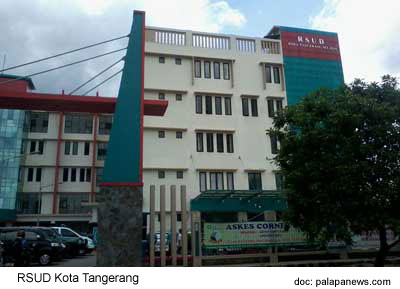
BEKASI – Renovasi sejumlah ruangan di RSUD Kota Bekasi mempengaruhi pelayanan di rumah sakit pelat merah itu. Bukan hanya bagi mereka yang masih hidup, mereka yang meninggal dunia akibat korban kecelakaan pun tak akan diterima di rumah sakit itu.
Maka, polisi yang paling ‘rajin’ mengirim jenazah korban kecelakaan, baik karena kecelakaan tunggal seperti ditabrak kereta ataupun korban kejahatan lainnya untuk otopsi, harus langsung ke RS Polri Kramatjati, Jakarta Timur.
Ini juga yang terjadi ketika sesosok mayat perempuan tanpa identitas yang dikirim aparat Polsek Jatiasih, kemarin terpaksa dikirim ke RS Polri Kramatjati, Jakarta Timur. Pasalnya, pihak rumah sakit berdalih kamar jenazah di RSUD Kota Bekasi tak bisa menerima dengan alasan kapasitas terbatas.
’’Ada pemugaran kamar jenazah. Bangunan lama dirobohkan untuk dibangun sedang dibangun baru jadi sementara terbatas sekali kapasitasnya,” kata Direktur Utama RSUD, Kota Bekasi Titi Masrifahati, Minggu (11/08) kemarin.
Menurut dia, pemugaran ruangan itu sudah disosialisasikan kepada Polresta Bekasi Kota dan sekitarnya sejak 1,5 bulan lalu. Target rampungnya sendiri baru selesai Desember 2013 sesuai dengan kontrak kerja dengan pemborong.
’’Saya minta agar diupayakan didahulukan ruang jenazah ini. Kami minta bulan Oktober selesai karena sekarang pelayanan berada di ruangan darurat,” katanya.
Titi menambahkan, pascapemugaran pelayanan di RSUD akan bertambah. Pihak rumah sakit sudah dapat melakukan otopsi jenazah. Sehingga pihak Kepolisian tak perlu lagi membawa jenazah korban kejahatan ke RSCM maupun RS Polri Kramajati, Jakarta.
’’Ke depan layanan pemulasaran jenazah akan lebih dikembangkan setelah bangunan jadi. Dan bisa melakukan otopsi di dalam. Karena saat ini kami sudah punya kontrak kerja dengan dua orang forensik. Sedangkan Sumber Daya Manusia (SDM) rumah sakit sedang magang di RSCM,” tandasnya.
Sumber: jpnn.com
RSUD Besemah Siap Layani Penderita THT dan Syaraf
PAGARALAM – Dalam waktu dekat, Rumah Sakit Umum Daerah (RSUD) Besemah Kota Pagaralam siap melayani khusus pasien penderita THT (Telinga, Hidung, dan Tenggorokan) dan neurologi atau penyakit syaraf. Peningkatan pelayanan kesehatan merupakan misi rumah sakit yang telah menerapkan Badan Layanan Umum Daerah (BLUD). Hal ini diungkapkan Direktur RSUD Besemah Kota Pagaralam Edy Kenedi SpB didampingi Kabid Pelayanan Desi Elviani SE, dan Kasi Rekam Medik Ermiza AM.Keb, kepada wartawan senin (12/8).
Menurutnya saat ini dua residen spesialis THT dan Neurologi atau syaraf sudah siap. Ini artinya, pelayanan kesehatan bertambah. Sebelumnya telah ada spesialis anak, bedah, penyakit dalam, dan kebidanan. “Sekarang pelayanan Poli THT dan syaraf sudah bisa melayani masyarakat. Penambahan dokter residen ini merupakan kerjasama pihak RSUD Besemah dengan UNDIP Semarang. Selain itu, kita juga akan MoU dengan Unsri (Fakultas Kedokteran,red) untuk penambahan dokter yang kedepan mudah-mudahan bisa mengabdi di RSUD Besemah untuk melayani masyarakat Pagaralam dan sekitarnya,” katanya.
Sumber: sumeks.co.id
Kelola RSUD Solo Pemkot Masih Hutang 10 Perwali
SOLO – Sebanyak 10 peraturan Wali Kota (Perwali) yang menjadi landasan hukum pengelolaan mandiri RSUD Ngipang Banjarsari hingga kini belum disahkan. Padahal, Perwali tersebut penting sebagai legalitas pengangkatan pegawai hingga pengelolaan keuangan.
Direktur Utama RSUD, Sumartono Kardjo, mendesak Pemkot segera mengesahkan aturan tersebut seiring berjalannya manajemen Badan Layanan Umum Daerah (BLUD) RSUD.
Menurutnya, ada enam Perwali yang mendesak disahkan oleh Bagian Hukum dan HAM Setda Solo.
“Ada 10 konsep lebih, tapi yang paling mendesak enam. Di antaranya Perwali soal Pengangkatan Pegawai, Penggunaan Keuangan, Perwali Remunerasi, Perwali Perencanaan RAB dan Tarif Pelayanan BLUD,” urainya kepada wartawan di Balai Kota, Senin (12/8/2013).
Dia mengungkapkan hanya Perwali BLUD RSUD yang sudah disahkan dari seluruh draft yang diajukan. Namun demikian, landasan tersebut dinilai belum cukup untuk menopang kekuatan pengelolaan. Dirinya mencontohkan tanpa Perwali RAB, RSUD akan kesulitan membayar gaji pegawai. Problem itu menurutnya bisa melebar ke masalah rekrutmen jika tak segera ditangani.
Dari pemetaan beban kerja, RSUD masih butuh setidaknya 200 pegawai baru yang terdiri dari dokter spesialis, paramedis, administrasi, teknisi dan kebersihan.
“Saat ini memang masih bisa diatasi dengan ketersediaan staf lama. Namun kami tetap harus mempersiapkan rekrutmen,” tuturnya.
Informasi yang diterima Solopos.com, rancangan Perwali tentang Pengangkatan Pegawai menyebut status pegawai BLUD RSUD sebagai non-PNS, baik pegawai tetap maupun kontrak. Sementara mekanisme rekrutmen akan diserahkan pada konsultan selaku penyeleksi calon pegawai.
“Perwali nantinya bakal menjamin hak pegawai tetap seperti remunerasi dan sistem karier.”
Kabag Hukum dan HAM Setda Solo, Kinkin Sultanul Hakim, optimistis seluruh rancangan Perwali RSUD bisa segera disahkan. Menurut Kinkin, wewenang pembahasan dipegang langsung dirinya dan Asisten Sekda Bidang Kesra, Eni Tyasni Suzana, karena Sekda, Budi Suharto, masih sakit.
Kinkin menambahkan, finalisasi pembahasan tiap-tiap Perwali membutuhkan masukan SKPD terkait. Sejumlah SKPD yang dilibatkan di antaranya Badan Kepegawaian Daerah (BKD) mengenai rekrutmen pegawai dan Dinas Pendapatan Pengelolaan Keuangan dan Aset (DPPKA) tentang sistem keuangan.
Sumber: solopos.com
Jajaran Kemenkes Diminta Utamakan Tiga Sasaran
Jakarta, PKMK. Nafsiah Mboi, Menteri Kesehatan (Menkes) RI, meminta agar seluruh jajaran Kementerian Kesehatan (Kemenkes) RI mengutamakan sejumlah sasaran dalam upaya menyehatkan masyarakat. Sasaran tersebut antara lain Program Jaminan Kesehatan Nasional (JKN), pencapaian target Millenium Development Goals (MDGs), dan upaya meraih opini Wajar Tanpa Pengecualian (WTP) Murni dari Badan Pemeriksa Keuangan RI. “Seluruh keluarga besar Kemenkes harus bekerja lebih baik lagi dalam upaya menyehatkan masyarakat,” ungkap Nafsiah di Jakarta (12/8/2013).
Dalam acara Halal Bi Halal, Menkes menyatakan memberikan selamat dan apresiasi tinggi atas semangat kerja yang telah ditunjukkan seluruh jajaran Kemenkes. “Terima kasih atas kehadiran Saudara untuk kembali bekerja dengan baik, tepat pada waktunya,” kata dia seperti ditulis siaran pers dari Kemenkes.
Lebih lanjut Menkes mengatakan, di hari pertama masuk kerja usai libur panjang Idul Fitri, hampir seluruh PNS di lingkungan kantor pusat Kemenkes, masuk kerja. Pegawai yang tidak hadir tanpa alasan yang jelas berjumlah 1,2 persen dari 4.523 orang. Untuk ketidakhadiran itu, sanksi akan diberikan. Itu sesuai dengan Peraturan Pemerintah (PP) Nomor 53 Tahun 2010 tentang Disiplin PNS.
Dalam Halal Bi Halal itu, hadir pula Profesor Ali Ghufron Mukti, Wakil Menteri Kesehatan RI. Demikian pula pejabat lain di lingkungan Kemenkes RI.
Terkait tiga sasaran itu, pada awal tahun 2014, Program JKN ditargetkan mulai beroperasi melalui Badan Pengelola Jaminan Sosial Kesehatan (BPJS Kesehatan). Di dalamnya, sekitar 86 juta warga miskin akan mendapatkan subsidi premi dari Pemerintah Indonesia sebesar 19 ribu rupiah per orang per bulan.
Untuk MDGs di tahun 2015, ada sejumlah sasaran di sektor kesehatan yang harus dicapai Indonesia ataupun negara lain yang menandatangani komitmen di tahun 2000. Itu antara lain penurunan AKI (angka kematian ibu) saat melahirkan, dan lain-lain.
Sementara, Badan Pemeriksa Keuangan RI (BPK) di pertengahan tahun 2013 memberikan opini Wajar Tanpa Pengecualian (WTP) dengan Paragraf Penjelasan, terhadap Laporan Keuangan Kemenkes Tahun 2012. Opini WTP Murni belum bisa diberikan karena proyek pengadaan vaksin flu burung senilai Rp 1,3 triliun yang masih mangkrak.
Materi Private Sector in Health Symposium di Sydney
- Assessing Reform

- Estimating the Effect of Disruptive Technologies and Policies in the US Healthcare Market

- Informal Health Providers in India, Uganda and Nigeria_ Characteristics and Potential for Reaching Universal Coverage

- Managing Insurance Programmes

- Networks in Health Economics

- Private Health Insurance

- Theoretical Studies of the Impacts of Australian Healthcare Reform Policies on Healthcare Markets

Pengantar Minggu Ini (13 – 19 Agustus 2013)
Private Sector in Health Symposium di Sydney
It’s hard to believe, but it’s been nearly one month since we held the Private Sector in Health Symposium in Sydney. As such, we wanted to take the opportunity to share resources with you from the day.
Spurred on by the keynote presentations, a key question to emerge from the day is ‘what exactly do we mean by the private sector’? People often limit the definition to ‘for-profit organisations’, but from the day we saw a large number of non-state actors operating in health systems around the world. There were also questions of separating out private provision of services from private financing for health services. These are some of the questions we hope to take to the next Symposium.
On that note, David Bishai and Gerry Bloom, the co-organisers of this year’s Symposium are pleased to announce that they will be passing the torch to Freddie Ssengooba and Kara Hanson. They’ll be working with the Scientific Committee to determine the most appropriate shape, format and location for that — so watch this space.
In the meanwhile, we’ll continue to keep you updated on our processes of institutionalising the Private Sector in Health group.
We’re sorry that you couldn’t join us in Sydney, but do take a moment to find out what you’ve missed.
Overview of the day
The day started off with a thoughtful welcome to the country by Millie Ingram, followed by a keynote from Bruce Bonyhady on the recent introduction of the National Disability Insurance Scheme in Australia. In his inspiring keynote, Bruce noted the strong role that the private sector had in reframing the debate around disability in Australia. Instead of focusing on disability solely as a rights issue, he worked with others to reframe it as an economic — one focused on insurance and risk. He said it sprang from a recognition that: “there are only two types of people in this world, those with a disability, and those who have yet to get a disability”. He also noted the reality of changing demographics: disabled children often rely heavily on their parents for care, but are starting to outlive their own parents. From an economic standpoint, he noted that a 1% decrease in informal care from friends and relatives led to a 4% increase in seeking formal care supported by the government, which he argued as unsustainable in the longterm. And so, after being reframed as an economic issue, it quickly became a political one. The government introduced the scheme at the beginning of July, and it is funded by a mill levy on health services that is likely one of the most popular tax rises in Australian history, with over 80% supporting the move. The keynote was a good reminder to us that the role of the private sector in health can be diverse — it’s not always about service provision or financing, but can also be about shifting the discourse and reframing policy debates.
Following the opening keynote, the participants broke out into three rounds of parallel sessions covering a diverse range of issues, such as regulation, influencing quality of care, health financing and a focus on equity. These presentations are available for download on the right side of this email.
In the afternoon, a closing plenary session was delivered by Mushtaque Chowdhury from BRAC, an NGO from Bangladesh that has quickly become one of the world’s largest. Mushtaque attempted to explain the Bangladesh health ‘miracle’ — that the country has strong health indicators despite limited investment in health from the government. He noted that Bangladesh has the highest life expectancy in the region, as the lowest infant and maternal mortality, but it also spends the least per capita on health. He attributed this ‘miracle’ to the strong innovation in the non-state sector in Bangladesh. He also focused on the role of entities like BRAC, which view poverty as a complex issue that must be tackled through a number of different initiatives. For example, BRAC runs micro-credit schemes, education programmes, health promotion schemes, and agricultural extension work. His presentation challenged those present at the symposium to rethink the nature of the private sector. BRAC is nearly impossible to categorise — is it an NGO, a social enterprise, a business, a bank? — and yet we understand that it has a critical role to play in the Bangladesh health market system and it’s not the public sector.
Following Mushtaque’s presentation, participants had a constructive discussion to share their reflections from the day as well as chart a way forward. Many were struck by the diversity of the participants, but noted that there were not many representatives of the for-profit private sector at the meeting, and they felt that their contribution would have added significantly to the day. There were also calls to have a clearer definition of what is understood by the term ‘the private sector’, and to focus on a few core themes in future research. In particular, there was a feeling that not enough was being done on assuring quality of private sector providers and on regulating health markets. There was also a call to separate out two distinct potential roles for the private sector: health service delivery and health financing.
The event concluded with a drinks reception sponsored by HANSHEP and CHMI, who will soon be re-launching its website cataloguing health market innovations — a valuable resource for all those working on the private sector in health in low- and middle-income countries.
|
Storify
View the social story — Tweets, pictures and videos — of the Symposium. Pictures
Commentary and reactions
|
Keynotes
View Bruce Bonyhady’s keynote address on the establishment of the Australian National Health Disability Insurance Scheme Presentations
Download presentations from the day |
Medicare to penalize Anniston hospitals for excess re-admissions
The federal government will penalize Anniston’s two hospitals with smaller Medicare reimbursement checks starting in October for re-admitting too many patients after they’ve already been treated and discharged.
For the county’s largest hospital, the cuts could amount to $300,000. But efforts are underway among area health care providers to lower those re-admission rates and negate the penalties.
According to records the Centers for Medicare and Medicaid released earlier this week, Regional Medical Center and Stringfellow Memorial Hospital are two of 2,225 U.S. hospitals that will receive less in Medicare reimbursements starting Oct. 1 for the 2014 fiscal year for having too many patient re-admissions. The Medicare penalty program is part of an effort by the federal government to reduce health care costs through improved efficiency. Some health care industry experts say the program, which began in 2012, will benefit hospitals and patients through better care and lower costs. Meanwhile, RMC administrators have worked with area nursing homes and long-term care facilities the past year to reduce re-admissions and don’t expect a penalty next year.
The Medicare reimbursement penalty program, which is part of the Affordable Care Act federal health care reform law, will impose a total of $227 million in penalties on hospitals in the 2014 fiscal year. How much a hospital is penalized is based on a variety of factors which when combined show whether the hospital is re-admitting too many patients.
CMS records show RMC will face a 0.4 percent cut in Medicare reimbursements in the 2014 fiscal year, amounting to about $300,000. The penalty is based on RMC’s re-admission rate for this year. RMC received a 0.2 percent reduction in Medicare reimbursements at the start of the 2013 fiscal year based on its 2012 re-admission rates.
Medicare is a federal program that provides insurance mainly for Americans who are at least 65 years old.
Stringfellow faces a 0.15 percent reduction in Medicare reimbursements in 2014, an increase from the 0.07 percent reduction it received in 2013. Attempts to reach Stringfellow Thursday and Friday for comment were unsuccessful.
RMC Jacksonville, which RMC purchased in December, received no penalty for the 2014 fiscal year after receiving a 0.4 percent decrease in reimbursements for this year.
Cristina Boccuti, senior associate with the Kaiser Family Foundation, said the program is designed to benefit patients and save Medicare money. Kaiser is a nonprofit, nonpartisan group that focuses on health care issues facing the country.
“Patients will gain from not being re-admitted … and Medicare will not be spending for a second hospitalization,” Boccuti said. “Hospital stays are very costly.”
Dr. Mickey Trimm, associate professor of health care management at the University of Alabama at Birmingham, said that overall, the program should help hospitals improve care for patients.
“I think it’s a good, interim step because it’s forcing hospitals to take a look at continuity of care,” Trimm said. “Hospitals do not always have continuity with health and rehab agencies.”
Trimm noted that most hospitals have received some sort of penalty through the program and many of the larger ones are now starting to do something about it, since the maximum possible penalty will increase to a 2 percent reduction in Medicare reimbursements in 2014.
“That’s a large amount … by 2014, there will be some pretty significant efforts to prevent re-admissions,” Trimm said.
David McCormack, CEO of RMC, said that when the program was announced two years ago, his director of case management and social services, Mary Ann Crow, organized an initiative among RMC, area home care professionals and nursing homes to lower re-admission rates.
“These patients being re-admitted are all chronically ill people,” McCormack said. “What we want to do is keep them out and keep them healthy.”
McCormack said that last year, RMC had an approximately 22 percent re-admission rate.
“Last quarter it was down to 6 percent,” McCormack said. “The good thing is we won’t be penalized next time.”
CMS statistics show that re-admission rates in the U.S. reached a low of 18 percent in October 2012 and averaged 18.4 percent for the entire year after averaging 19 percent for the previous five years. CMS estimates there were 70,000 fewer re-admissions nationwide in 2012 compared to the five-year average rate.
Becky Helton, administrator for NHC Health Care in Anniston, which provides long-term care for seniors, said her organization has worked with RMC the past year to cut hospital re-admission rates. Through its efforts, NHC has so far this year reduced its hospital re-admission rates by 50 percent compared to last year, Helton said.
“It’ll be a long process, but we are making a big leap here at NHC in care,” Helton said.
To lower re-admissions, staff at NHC increased education of patients and their families in the proper use of medication and of the warning signs that will arise to warrant a hospital trip, Helton said.
“Along with that we have a tremendous amount of physician involvement, with a physician available on site three days a week and a nurse practitioner here five days a week,” Helton said. “So we can treat conditions quicker and pick up on problems quicker.”
Rosemary Blackmon, vice president of the Alabama Hospital Association, said the penalty program is helping improve health care in the area by strengthening coordination between hospitals and other health care providers. Still, some Alabama hospitals are concerned the penalty is being applied unfairly, Blackmon said.
“Hospitals can give the best discharge information they can, provide more information on medication use, but they can’t be in charge of compliance when patients leave,” Blackmon said. “It almost puts hospitals in a position of being case managers for patients not just in the hospital but once they get out, and I don’t know if that is necessarily fair.”
Source: annistonstar.com