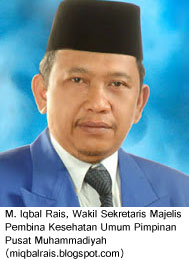
 Jakarta, PKMK. Dampak kewajiban rumah sakit swasta Islam yang tidak memiliki badan hukum khusus rumah sakit dapat terjadi pada banyak pihak. Dari empat rumah sakit Islam di Jakarta saja, jumlah orang terdampak itu mencapai setidaknya 8 ribu orang. Bila empat rumah sakit itu tidak beroperasi akibat tidak adanya hukum itu, orang-orang tersebut berpotensi dirugikan karena tidak bisa berobat ataupun bekerja, ungkap M. Iqbal Rais, Wakil Sekretaris Majelis Pembina Kesehatan Umum Pimpinan Pusat Muhammadiyah (7/5/2013).
Iqbal mengatakan, empat rumah sakit itu adalah RSIJ Cempaka Putih, RS Islam Pondok Kopi, RS Islam Sukapura, dan RSJ Islam Klender. Empat rumah sakit itu menampung pasien rawat jalan rata-rata 1.967 orang per hari. Sedangkan angka rata-rata pasien rawat inap adalah 617 orang per hari. Dalam sebulan ataupun setahun, angka pasien tersebut tentu lebih banyak lagi. Total pegawai di empat rumah sakit itu sebanyak 2.845 orang. Itu terdiri dari dokter, perawat, bidan, tenaga penunjang medis, dan tenaga non-medis. “Semua orang itu berpotensi dirugikan karena empat rumah sakit itu kini tidak punya badan hukum khusus rumah sakit,” ujar dia.
Lebih jauh dia mengatakan, Asosiasi Rumah Sakit Nirlaba (Arsani) mendukung langkah judicial review yang sekarang dilakukan Muhammadiyah pada sejumlah pasal ataupun ayat yang ada dalam Undang-Undang Nomor 44 Tahun 2009 tentang Rumah Sakit, yang mengharuskan adanya badan hukum khusus itu. Dalam Arsani, selain rumah sakit Islam, ada kelompok rumah sakit Katolik, Protestan, dan swasta biasa. “Mereka mengatakan, keharusan punya badan hukum khusus itu menyulitkan. Kalau misalnya akan berubah dari rumah sakit biasa ke rumah sakit pendidikan, repot,” ucap Iqbal. Rumah sakit yang dikelola oleh Al Irsyad, Carolus, dan Atmajaya, juga berpotensi terdampak oleh keharusan memunyai badan hukum khusus itu.
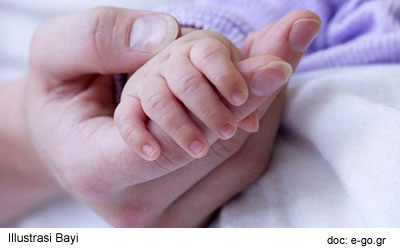 TEMPO.CO, Cirebon-Sepasang bayi kembar yang baru dilahirkan dari keluarga miskin meninggal, setelah sebelumnya ditolak mendapatkan perawatan di RSUD Indramayu. Pihak rumah sakit menyatakan ruang inkubator untuk merawat bayi itu penuh.
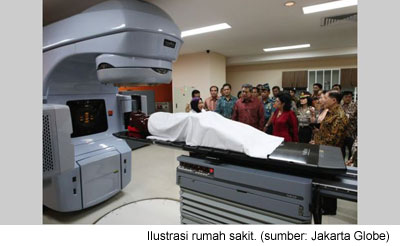 Pontianak – PT Bank Ekonomi Raharja Tbk (BAEK) dan PT Hexa Daya Medika (HDM) menandatangani nota kesepahaman (memorandum of understanding/MoU) terkait pemberdayaan RS Mitra Medika.
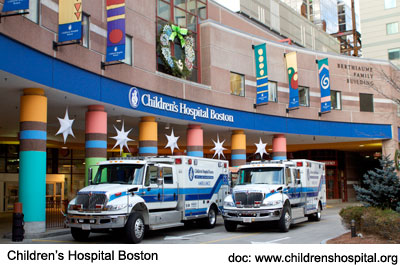 About 500 children each year arrive at the Boston Children’s Hospital emergency room with chest pain, a symptom that is rarely serious. In the past, many of them received tests they didn’t need, including EKGs, echocardiograms, stress tests, and around-the-clock monitoring using electrodes attached to a portable device. “There is a lot of anxiety among parents and children that this could be a heart problem,’’ said Dr. Michael Farias, a senior resident.
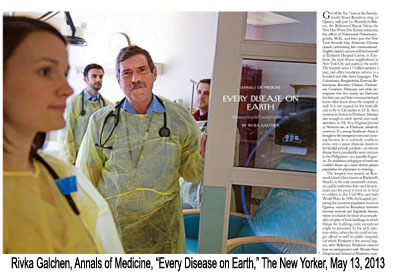 Get off the No. 7 train at the Seventy fourth Street-Broadway stop, in Queens, walk past La Abundancia Bakery, the Bollywood Beauty Salon, the New Hae Woon Dae Korean restaurant, the offices of Vishwanath Puttaswamygowda, M.D., and then past the New York Seventh-Day Adventist Chinese church (advertising free conversational-English classes), and you will find yourself at Elmhurst Hospital Center, in Elmhurst, the most diverse neighborhood in New York City and maybe in the world. The hospital serves 1.7 million patients a year, and offers translation services in a hundred and fifty-three languages. The Colombians, Bangladeshis, Koreans, Belarussians, Burmese, Chinese, Vietnamese, Croatians, Mexicans, and other immigrants who live nearby use Elmhurst for their care, and their communities back home often know about the hospital as well. It is not unusual for the exotically sick to fly to LaGuardia or J.F.K. from overseas to check in to Elmhurst. Diseases rare enough to merit special-case-study attention in The New England Journal of Medicine are, at Elmhurst, relatively common. If a young Southeast Asian is brought to the emergency room one morning because he is suddenly unable to move, even a junior physician knows to list familial periodic paralysis—an obscure disease that is considerably more common in the Philippines—as a possible diagnosis. An ambitious pedagogue of medicine couldn’t dream up a more diverse patient population for physicians-in-training.
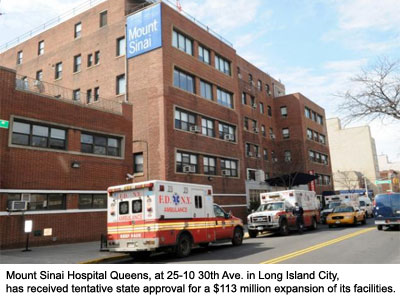 The state Health Department has approved a major facelift of a western Queens hospital.
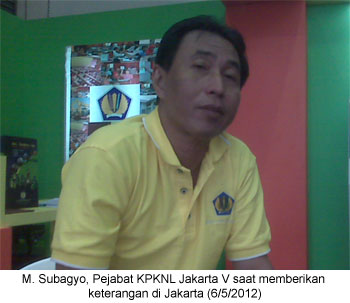 Jakarta, PKMK. Peserta lelang aset peralatan medis milik rumah sakit pemerintah di Kantor Pelayanan Kekayaan Negara dan Lelang (KPKNL) Jakarta cenderung terbatas. Umumnya, peserta merupakan kalangan yang benar-benar mengetahui fungsi peralatan medis tersebut. Setelah dibeli, peralatan medis itu mungkin dijual lagi ataupun diperbaiki. Melalui proses ini, mereka benar-benar mengetahui pihak yang berminat membeli, ungkap M. Subagyo, Pejabat KPKNL Jakarta V di Jakarta (6/5/2012).
 Citing the real impact cutting the safety net would have on the most vulnerable residents, San Diego County Supervisors Greg Cox and Dianne Jacob joined with local hospital leaders today to call on the California Legislature and Governor Brown to spare hospital-based skilled-nursing facilities and other health care providers from devastating Medi-Cal cuts. Both Assembly Bill 900 by Assemblymember Luis Alejo (D-Salinas) and Senate Bill 640 by Senator Ricardo Lara (D-Long Beach) would reverse the Medi-Cal cuts that were enacted in 2011.
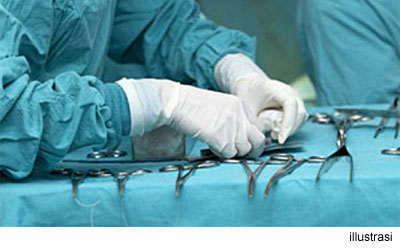 TEMPO.CO , Yogyakarta:Penderita kelainan saraf otak, seperti tumor otak dan stroke di Indonesia bisa bernafas lega. Lantaran proses operasi tak lagi harus dengan cara membedah tempurung kepala. Melainkan cukup membuat sayatan pada alis mata sebesar lubang kunci atau yang dikenal dengan teknik operasi lubang kunci (keyhole surgery).
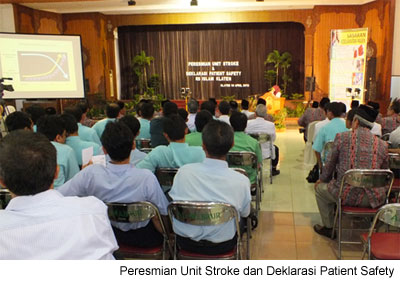 Citizen6, Klaten: Stroke yang tidak segera ditangani dengan tepat bisa menyebabkan kematian. Jika penderita segera dibawa ke rumah sakit dan terselamatkan, kadang-kadang penderita mengalami kelumpuhan pada anggota badannya atau hilangnya sebagian ingatan atau kemampuan bicaranya.