
 The mortality figures as they are currently calculated for Dutch hospitals are not a good measure for the quality of the health care they provide.
The picture of hospitals with the lowest intramural mortality figures can look less favourable when the number of patients who die shortly after having been discharged from the hospital is taken into consideration as well. This was shown in a study conducted by University Medical Center Utrecht and Erasmus Medical Center in the Netherlands, which was published today in the leading medical publication the British Medical Journal. The researchers recommended that post-discharge mortality figures should be incorporated into official mortality figures.
The study showed that hospitals with low intramural mortality have relatively high mortality levels after discharge and vice versa. This is why, based on the 30-day mortality (deaths that occur within the first 30 days after hospital admission, irrespective of the place of death), many hospitals have a different so-called ‘Hospital Standardized Mortality Ratio’ (HSMR) than that based on hospital mortality (deaths that occur during the hospital stay). The absolute differences in the HSMR between hospitals are also smaller when the new calculation method is used.
“A lower HSMR, which is currently being interpreted as a rough indication for a good quality of care, may partially be the result of a shorter hospital stay and a relatively higher mortality rate after discharge. A hospital’s responsibility doesn’t stop after the patient has been discharged. This is why it is important that mortality shortly after the discharge is incorporated when calculating the HSMR”, says Prof. Cor Kalkman, Professor of Anaesthesiology at UMC Utrecht and co-author of the BMJ publication.
A measure of the quality of care
The HSMR is a standard used to express mortality in hospitals. The HSMR is published annually and is presented as an important measure for the quality of care. Currently, only patients that die while in hospital are included in the calculation of the HSMR. For example: a patient undergoing a hip operation is discharged from hospital A after three days. That same patient might be discharged from hospital B after five days. If this patient would die on day four, the death would not be counted in hospital A but it would be included in hospital B. This difference between the method of recording data results is an unfair comparison between the quality of care in the hospitals in question.
Deaths within 30 days after discharge should be included
The study used the Municipal Personal Records Database to be able to continue monitoring patients even after their discharge from the hospital. This has made it possible to include all deaths within 30 days after admission in the calculation of the HSMR, irrespective of the place of death.
According to the researchers, the HSMR has other limitations as a measure for the quality of care as well. For example, the adjustment made for the patient’s health status at the time of their hospital admission is limited. Furthermore, a single number as a measure of quality for an entire hospital is difficult to interpret: patients don’t know how the hospital performs with respect to their specific condition.
The study was subsidised by a grant from the Ministry of Health, Welfare and Sport. The study data was collected by the Dutch Hospital Data Foundation (on behalf of the Dutch Association of Hospitals and the Dutch Federation of University Medical Centres) and Statistics Netherlands.
Source: european-hospital.com


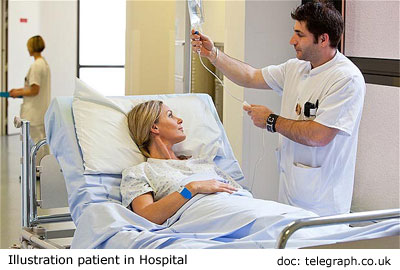 HEALTH chiefs have unveiled plans to improve access to health and social care services closer to home as part of efforts to reduce demand on hospitals.
 Chase Farm Hospital has opened an urgent care centre to treat people with non life threatening injuries.
 Upaya itu dilakukan untuk mendukung target RSUD dr Murjani Sampit mengejar akreditasi versi 2012 pada 2014 nanti
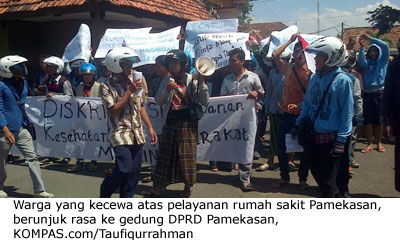 PAMEKASAN, KOMPAS.com – Kecewa terhadap pelayanan Rumah Sakit dr.Slamet Martodirdjo, Pamekasan, Jawa Timur, puluhan warga yang mengatasnamakan Aliansi Masyarakat Peduli Pamekasan Sehat (Ampas), mendatangi Kantor DPRD Pamekasan, Senin (21/10/2013).

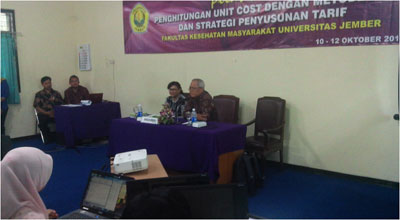
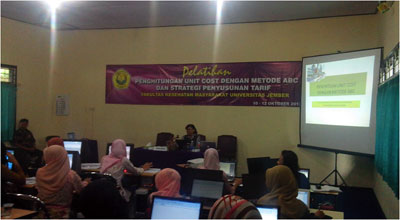
 Ada banyak metode untuk menghitung unit cost pelayanan di RS. Masing-masing metode memiliki kelebihan dan kekurangan. Namun yang terpenting adalah bagaimana tim Penghitungan Unit Cost di RS mampu menggunakan salah satu metode yang paling dikuasainya dengan tepat. Hal ini dilakukan untuk menghasilkan informasi biaya satuan pelayanan. Informasi ini menjadi semakin penting dan tak dapat ditunda lagi karena UU BPJS akan segera berlaku. Penghitungan yang tepat akan memberikan gambaran bagi manajemen RS mengenai komposisi dan besarnya biaya pelayanan. Informasi ini tentunya dapat digunakan lebih lanjut untuk, salah satunya, mengendalikan biaya agar terjadi efisiensi yang optimal. Selain itu, bagi RSUD yang sudah menerapkan BLUD, maka mau tidak mau penetapan tarif pelayanan menggunakan unit cost sebagai dasar penetapan tarifnya. Diantara berbagai metode penghitungan yang berkembang, ABC adalah satu metode yang dianggap sangat sulit diterapkan. Padahal metode ini cukup mampu menggambarkan biaya, karena dihitung berdasarkan aktivitas. Dengan demikian, metode ini sangat cocok diterapkan diera BPJS. Minggu lalu telah berlangsung pelatihan penghitungan unit cost pelayanan RS yang materi dan referensinya dapat Anda simak

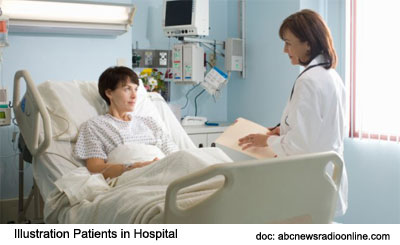 (dailyRx News) It’s not uncommon for hospitalized patients to have weakened immune systems that aren’t able to fight off infections. And that can make a hospital stay a risk to sick people.
 (Fremont County, Wyo.) – For the second consecutive year, Lander Regional and Riverton Memorial Hospitals were presented with a hospital quality award from Mountain-Pacific Quality Health during the Wyoming Hospital Association convention in Sheridan in September.
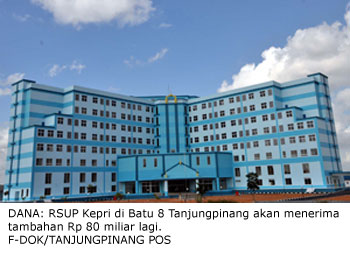 Dianggarkan di APBD 2014 dalam Bentuk Multiyears