25 Oct2012
DebMed Patient Safety Solution Helps Hospitals Minimize Reduced Reimbursement for Patient Readmissions
DebMed GMS Leads the Change in Patient Safety and the Reduction of Hospital Readmissions
By DebMed(R)
CHARLOTTE, N.C., Oct. 24, 2012 — /PRNewswire/ — DebMed®, creator of DebMed® GMS™ (Group Monitoring System), the world’s first evidence-based group monitoring system to electronically monitor, track and report compliance rates in real-time based on the World Health Organization’s (WHO) “Five Moments for Hand Hygiene,” is providing assurance through technology for the Hospital Readmissions Reduction Program.
Under the Affordable Care Act, the Hospital Readmissions Reduction Program, effective October 1, 2012, reduces reimbursements to hospitals with excess readmissions. Hospitals that perform worse than average, with patients returning to the hospital within 30 days of discharge, will face up to a 1 percent penalty, which would average $125,000 per facility this coming year, according to government estimates. The penalties increase over time up to 3 percent in 2015. Under the program, the measures that are related to the reimbursements focus on heart attacks, heart failure, pneumonia, surgical care, patients’ perception of care and healthcare-associated infections (HAIs).
“With legislation threatening hospital reimbursements as a result of patient readmissions, it is imperative that patient quality and safety are top of mind,” said Paul Alper, Vice President of Strategy and Business Development, DebMed. “DebMed is helping hospitals lead the change to improved care through electronic hand hygiene monitoring with the DebMed GMS that provides actionable, real-time data to help increase hand hygiene compliance and thereby reduce preventable infections.”
The DebMed GMS electronically tracks and reports healthcare workers’ hand hygiene behavior, helping to increase hand hygiene compliance and thereby reduce healthcare-associated infections to improve patient safety and minimizing the impact of the new readmissions penalties. A study conducted at Duke University Medical Center and published in Infection Control and Hospital Epidemiology showed that minimal improvements in compliance lead to substantial savings, concluding that a 1 percent increase in hand hygiene compliance would result in annual savings of $39,650 for a 200-bed hospital.
HAIs account for nearly 2 million infections, 99,000 deaths and up to an estimated $45 billion in costs annually in the U.S alone. Proper hand hygiene is the number one way to prevent HAIs, yet the typical rate of hand hygiene compliance is estimated to be only 40-50 percent.
Nearly one-fifth of Medicare beneficiaries – roughly 2 million beneficiaries per year – discharged from a hospital return within 30 days, according to the Medicare Payment Advisory commission (MedPAC). Identifying and reducing avoidable readmissions will improve patient safety, enhance quality of care and lower healthcare spending.
Sumber: heraldonline.com
25 Oct2012
Menkes Resmikan RSUD Kota Pontianak
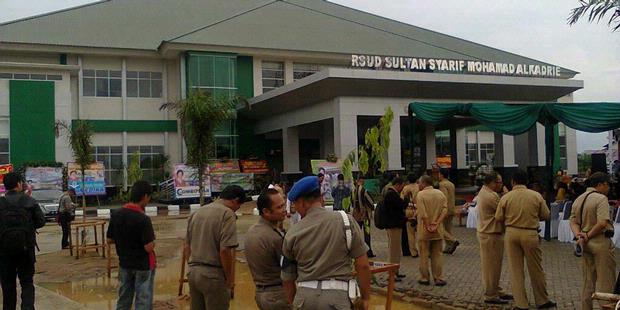
PONTIANAK, Menteri Kesehatan Nafsiah Mboi meresmikan Rumah Sakit Umum Daerah Sultan Syarif Mohamad Alkadrie Kota Pontianak, Kalimantan Barat, Rabu (24/10/2012). Rumah sakit akan beroperasi tanpa kelas.
Rumah sakit tanpa kelas akan memberikan pelayanan yang sama kepada semua pasien. Pasien akan dilayani berdasarkan penyakit yang diderita.
Pada 2012 ini, rumah sakit baru akan memberikan pelayanan untuk rawat jalan. Pada 1 Januari 2013 mendatang, pelayanan rawat inap akan mulai diberikan untuk pasien melahirkan. Lalu, pada 1 April 2013, rumah sakit baru akan beroperasi penuh.
Sumber: kompas.com
25 Oct2012
Pemerintah Punya Dana Jaminan Kesehatan

Jakarta,Pemerintah menetapkan premi jaminan kesehatan bagi warga miskin Rp 22.000 per orang per bulan. Jika jumlah warga miskin yang ditanggung 100 juta orang, tiap tahun pemerintah memberikan subsidi Rp 26,4 triliun.
Nilai premi ini dinilai sejumlah pihak terlalu rendah. Hal ini bisa berdampak pada rendahnya mutu layanan kesehatan. Padahal, rencana belanja negara dalam APBN 2013 Rp 1.657,9 triliun.
”Pelaksanaan jaminan kesehatan semesta bukan soal dana, melainkan kemauan pemerintah,” kata Direktur Eksekutif International NGO Forum on Indonesian Development Sugeng Bahagijo di Jakarta, Rabu (24/10).
Tim Bank Dunia, lanjut Sugeng, mengusulkan besaran premi Rp 36.000 per orang per bulan. Jika separuh penduduk ditanggung dalam jaminan ini, pemerintah mengeluarkan subsidi Rp 60 triliun tiap tahun. ”Pemerintah sangat mampu menyediakan itu,” ujarnya.
Sumber dana bisa dari pengalihan subsidi BBM yang pada 2012 saja mencapai Rp 123 triliun. Pemerintah juga bisa mencari sumber pajak baru, seperti pajak dari transaksi keuangan, kenaikan cukai rokok, atau efisiensi dana sektor kesehatan.
Sugeng menilai rendahnya subsidi untuk jaminan kesehatan yang disediakan pemerintah menunjukkan masih dianaktirikannya sektor kesehatan dibandingkan anggaran pendidikan. Padahal, kesehatan dan pendidikan saling terkait dalam meningkatkan kesejahteraan masyarakat.
Sekretaris Jenderal Komisi Anggaran Independen Abdul Waidl mendesak pemerintah lebih terbuka terhadap peta jalan penyelenggaraan jaminan kesehatan semesta yang akan diselenggarakan pada 2014.
Sumber: KOMPAS.com
24 Oct2012
Medical Tourism in Asia to Reach $8.5 Billion by 2013; Clinical Partnership Opportunities at Upcoming Asia-Based Conferences

FARMINGTON, Conn., Oct. 22, 2012 — /PRNewswire-iReach/ — Medical tourism has a bright future and Asia is the hotspot for this industry. Thailand and India are the key dominating players; however, the Philippines, Singapore, Malaysia and South Korea are turning up the competition with government-backed medical tourism programs. Singapore is already planning to develop into a leading health care destination with its medical tourism market experiencing steady growth of 11.9 percent over the past few years from 2004 to 2008. International patient arrivals to Malaysia are expected to grow at a CAGR of 29.27% between 2009 and 2013. A new market research report available from Global Information Inc (GII) provides overviews and key financials of prominent players in the Asian markets for medical tourism.
(Photo: http://photos.prnewswire.com/prnh/20121022/CG97488)
GII is also excited to announce two new international conferences will be taking place in early 2013. These global events focus on building relationships and partnerships in critical life science areas.
Asia Medical Tourism Analysis and Forecast to 2015
Medical tourism in Asia has increased rapidly in recent years as foreign tourists flock to exotic regions for healthcare services. The medical tourism industry in Asia is expected to reach USD $8.5 billion by 2013 at double digit compound annual growth rates.
This new report provides detailed analysis about the past, present and future outlook of medical tourism in Asia. Six Asian countries (India, Malaysia, Philippines, Thailand, Singapore, and South Korea) markets have been covered in this report. Each country markets has been analyzed from the point of medical tourist arrivals, medical tourism market, cost of medical treatment, patient perceptions, driving forces of that market, and roadblocks (challenges) to the market. This report provides valuable information to clients looking to venture into these markets and helps them to advise strategies while going for an investment in these markets. This report will help Investment Bankers, Research Analyst, Management Consultants, Researchers, Wealth Managers etc. to have access to the latest trends and recent developments in medical tourism industry.
An Executive Summary for this report and free sample pages from the full document are available at http://www.giiresearch.com/report/ren113160-asia-medical-tourism.html
Taiwan Trials 2013
February 26 – 27, 2013 | Taipei, Taiwan
Your business is about much more than just knocking on doors. Your marketing strategy is much more than a lead generator.Taiwan Trials 2013 will give you the unique opportunity to position your business in front of decision makers from Taiwan’s and the region’s most progressive companies involved in pharmaceutical, biotech, clinical management, clinical data management, clinical supply and many more.
To generate sales in Taiwan, you need a Taiwan-oriented platform and genuine leadership position. To generate awareness and response, you need targeted, decision-maker focused, geographically effective marketing. To generate profits, you need to attend Taiwan Trials 2013. Register today to meet trial sponsors, CROs, hospitals and technology and solution providers from Taiwan and elsewhere at this unique meeting platform to build close relationships.
More information available at http://www.giiconference.com/ima251924-2013/
4th Annual Clinical Trial Supply China 2013
January 16 – 17, 2013 | Beijing, China
Compared with Western countries, the growing clinical trials industry in China has many advantages – particularly relating to lower costs – this is why so many multinational pharmaceutical and biotech companies are transferring their clinical trial centers to China. However, the immature clinical trial supply chain and complicated/changing regulations are still major obstacles for pharmaceutical and biotech companies in the Chinese market. This year’s event will provide detailed information and more practical solutions on overcoming these challenges.
This is the only event that focuses on clinical trial supply chain management in China.
Sumber: sacbee.com
24 Oct2012
RSUD Sudah 35 Persen
PENUNJANG lain Balikpapan Tengah sebagai pusat permukiman adalah dibangunnya Rumah Sakit Umum Daerah (RSUD) di Gunung Malang. Rumah sakit tipe C ini merupakan proyek multiyears yang harus selesai sebelum akhir tahun 2013. Saat ini, pembangunan fisiknya sudah mencapai 35 persen dan ditarget mampu terealisasi 68 persen sampai akhir tahun 2012.
RSUD Gunung Malang berdiri di atas lahan seluas 1,2 hektare. Nantinya kapasitas rumah sakit ini sekitar 100 kamar di mana 70 persen di antaranya dikhususkan untuk warga miskin. Total anggaran untuk pembangunan fisik adalah Rp 78 miliar.
“Sebelumnya kita dapat suntikan dana dari APBD Perubahan 2012 Kota sebesar Rp 35 miliar. Sedangkan dalam APBD Kota murni 2012 alokasinya Rp 20 miliar dan dari APBD Perubahan Provinsi sebesar Rp 5 miliar,” ungkap Kepala Dinas Kesehatan Kota (DKK) Balikpapan Dyah Muryani, kemarin.
Direncanakan RSUD ini memiliki beberapa spesialis. Yakni dokter spesialis anak, dokter ahli penyakit dalam dan bedah, dokter spesialis THT (telinga hidung tenggorokan), dokter kandungan, juga ahli ortopedi.
Dyah mengatakan, sudah dibuka lamaran untuk tenaga kesehatan dan dokter baru. Selain itu, DKK juga telah memfasilitas sejumlah dokter di Balikpapan untuk melanjutkan pendidikan spesialis di sejumlah perguruan tinggi termuka di Jawa. “Ada yang di Fakultas Kedokteran Universitas Airlangga Surabaya, Universitas Brawijaya Malang, UGM Jogjakarta, Universitas Diponegoro Semarang, termasuk juga ada yang dari Universitas Hasanuddin Makassar,” imbuhnya.
Sementara, Kepala Bappeda Suryanto mengatakan pada awal 2013 pemerintah kota juga mulai memikirkan isi atau kelengkapan dari rumah sakit tersebut.
“Jangan sampai fisiknya selesai tapi belum ada isinya. Jadi awal 2013 ini diusulkan Rp 35 miliar ke Kementerian Kesehatan untuk penyediaan isinya. Mudah-mudahan awal 2014 bisa beroperasi,” pungkasnya.
Sumber: kaltimpost.co.id
23 Oct2012
Kebakaran di Rumah Sakit Taiwan, 12 Orang Tewas

Taipei, Setidaknya 12 orang tewas akibat kebakaran yang melanda sebuah rumah sakit di Taiwan hari ini. Sebanyak 72 orang lainnya luka-luka dalam insiden tersebut.
Api mulai berkobar pada dini hari waktu setempat di fasilitas perawatan pasien di rumah sakit di kota Tainan, Taiwan selatan.
Sebab-sebab kebakaran itu belum diketahui. Pihak berwenang kini tengah menyelidiki penyebab kebakaran. Demikian seperti diberitakan kantor berita AFP, Selasa (23/10/2012).
Seorang petugas pemadam kebakaran mengatakan kepada para wartawan, si jago merah kemungkinan berawal dari ruang penyimpanan di lantai dua gedung berlantai lima itu, yang merupakan bagian dari rumah sakit umum Sinying Hospital.
Dalam insiden ini, para korban yang terluka telah dilarikan ke sejumlah rumah sakit terdekat.
Dalam pernyataan yang disampaikan kantor Perdana Menteri (PM) Taiwan Sean Chen, disebutkan bahwa PM Chen shock atas insiden maut ini. Chen pun menyampaikan ucapan belasungkawa kepada para keluarga korban.
Sumber: detik.com
22 Oct2012
Pasokan Air Kurang, RSUD Surakarta Pakai Sumur Pompa Bekas Proyek
SOLO, Pengelola RSUD Surakarta mengaktivasi sumur pompa bekas proyek pembangunan gedung rumah sakit, untuk memenuhi kebutuhan air bersih yang masih kurang. Manajemen rumah sakit yang terletak di Kampung Ngipang, Kelurahan Kadipiro, Kecamatan Banjarsari itu rencananya juga akan membuat sumur dalam, untuk memenuhi kebutuhan air.
Diaktivasinya sumur pompa bekas proyek pembangunan dan rencana pembuatan sumur dalam, disebabkan pasokan air bersih dari PDAM belum mencukupi. Saat ini, pasokan air PDAM untuk rumah sakit pindahan dari lokasi lama di kawasan Setabelan, Kecamatan Banjarsari itu hanya sebesar 7 meter kubik per hari.
Direktur RSUD Surakarta Sumartono Kardjo menjelaskan, dari perhitungan yang dilakukan, idealnya sebuah rumah sakit mendapat pasokan air bersih minimal 20 meter kubik per hari. “Kami punya ground tank kapasitas 7 meter kubik. Untuk mengisi sampai 6 meter kubik saja, dengan pasokan air yang ada saat ini, butuh waktu dua hari semalam,” katanya.
Untuk mengatasi hal itu, RSUD sementara mengaktivasi sumur pompa bekas yang digunakan kontraktor proyek ketika membangun gedung rumah sakit. Sumur pompa ini mengambil air dari kedalaman 40 meter. “Karena kedalaman 40 meter, tentu kualitas airnya kurang bagus untuk kebutuhan medis, maupun untuk makan minum. Tapi setidaknya bisa memenuhi kebutuhan untuk kamar mandi,” tuturnya.
Namun penggunaan sumur pompa bekas itu hanya sementara, sembari menunggu dibuatnya sumur dalam yang kualitas airnya lebih bagus, karena diambil dari kedalaman lebih dari 100 meter.
“Anggaran untuk membuat sumur dalam sudah ada, sekitar Rp 90 juta dari APBD Perubahan 2012. Saat ini masih proses lelang, mudah-mudahan segera terealisasi. Kami juga meminta ke PDAM Surakarta agar pasokan air ditambah,” imbuhnya.
Sumber: suaramerdeka.com
22 Oct2012
Beds from Epsom and St Helier Hospitals to be donated to sick people in Africa and Asia
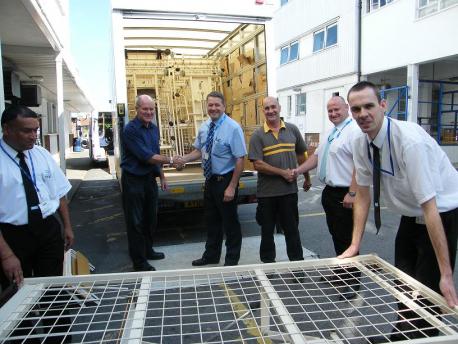
Sick people in parts of Africa and Asia are set to benefit from a donation of patient beds from Epsom and St Helier hospitals.
The beds, which were no longer needed by the hospitals and have been replaced with newer models, were recently presented to Aid to Hospitals Worldwide (A2HW) – a social enterprise that specialises in providing developing countries with free medical equipment.
A2HW will soon be taking the beds on the journey to their new homes, which include hospitals in the Democratic Republic of Congo, Somalia and Pakistan.
Jane Ward, the trust’s head of facilities, who is responsible for buying and recycling the beds patients use, said: “We are absolutely delighted to make this donation, as we know there are many deserving people who will benefit from them.
“Although these beds were no use to us any more, it gives us great pleasure to be able to pass them to people who are in desperate need of very basic medical equipment.
“Knowing these beds will provide some comfort to some sick people in Somalia, Pakistan and Democratic Republic of Congo, as well as giving the doctors and nurses a vital piece of kit, is heart-warming.”
A2HW’s chief executive, Mike Coleman, added: “It’s hard to picture the comfort or measure the benefits that outdated and redundant medical equipment brings to patients in poorer countries.
“What we would discard as outdated has massive health implications for many millions without proper provision in the developing world. We thank Epsom and St Helier hospitals for their kind contribution.”
Sumber: yourlocalguardian.co